Phone:
(701)814-6992
Physical address:
6296 Donnelly Plaza
Ratkeville, Bahamas.

A personal watercraft hull takes more abuse than many owners realize.
Shallow water, beaching, trailer bunks, docks, submerged objects and ordinary loading and unloading can all leave their mark on the bottom of a PWC.
Some marks are cosmetic.
Others deserve attention.
Regular PWC hull maintenance means knowing the difference and noticing when something has changed.
This guide covers the hull, deck and exterior body components of a personal watercraft and explains what owners should look for during routine inspections.
Quick Inspection | Hull Bottom | Damage & Cracks | Intake Area | Ride Plate | Sponsons | Deck & Body | Water Intrusion | Previous Repairs | When to Get Help
You don’t need to perform a detailed hull inspection every time the PWC comes out of the water. 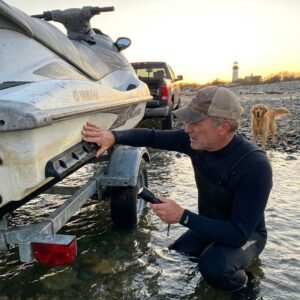
You should give it a quick look.
Walk around the machine and check:
Hull bottom
Bow
Keel
Chine areas
Intake area
Intake grate
Ride plate
Sponsons where equipped
Rub rails
Deck
Seat
Access panels
Drain plugs
Trailer contact areas
Look for anything that appears new or different.
That might include:
Cracks
Deep scratches
Gouges
Impact damage
Loose components
Missing fasteners
Damaged sealant
Unusual gaps
Water where it normally isn’t
Knowing what the machine normally looks like makes this much easier.
The top of a PWC receives plenty of attention because that’s the part the owner sees.
The bottom is where much of the abuse occurs.
Periodically inspect the entire underside.
Pay particular attention to:
Keel
Bow
Chines
Areas near the intake
Trailer bunk contact areas
Areas previously repaired
Minor scratches are common on used PWCs.
They can result from:
Beaching
Sand
Trailer loading
Floating debris
Shallow-water operation
Not every scratch requires repair.
What matters is its depth, location and whether the underlying hull structure has been damaged.
A deep gouge deserves more attention than ordinary surface scratching.
Look for:
Exposed underlying material
Fracturing around the damaged area
Delamination
Softness
Changes in shape
Signs of water intrusion
If you’re unsure whether damage is cosmetic or structural, have it evaluated before continued use.
Trailer bunks can hide hull damage.
When practical, inspect the areas immediately beside the bunks and any hull surface that becomes visible when the PWC shifts during launching.
Look for:
Concentrated wear
Gouging
Pressure damage
Cracking
Abrasion
Also inspect the trailer itself.
An exposed fastener or damaged bunk can continue damaging the same spot every time the PWC is loaded.
PWC Trailer Care & Setup →
A crack deserves investigation.
The important questions are:
Where is it?
How deep is it?
What caused it?
Is it changing?
Cracking may appear around:
Impact areas
Corners
Structural transitions
Hardware
Sponson mounts
Intake components
Ride-plate mounting areas
Previous repairs
A damaged area shouldn’t automatically receive filler, sealant or paint before the cause and extent of the damage are understood.
Cosmetic improvement and structural repair are not the same thing.
If damage is significant, determine what material the hull is constructed from and use repair procedures appropriate for that particular hull.
PWC hull construction varies by manufacturer and model.
A repair method appropriate for one hull material may not be appropriate for another.
Take a clear photograph and note the date.
At the next inspection, compare it.
A small condition that remains unchanged may tell a different story than one that continues growing.
The intake area underneath the PWC feeds water into the jet-pump system.
Its condition can affect propulsion and performance.
Inspect:
Intake opening
Intake grate
Grate mounting points
Fasteners
Surrounding hull
Visible pump area
Look for:
Bent components
Cracks
Missing fasteners
Impact damage
Weeds
Rope
Fishing line
Plastic
Other debris
Never place hands or tools into the intake area unless the machine is safely shut down and the manufacturer’s recommended safety procedures have been followed.
If debris is lodged deeply inside the propulsion system, follow the manufacturer’s procedures or obtain qualified service.
The intake deserves particular attention on fishing PWCs.
Fishing line has an impressive ability to find rotating equipment.
PWC Jet Pump, Intake & Impeller Care →
The ride plate is located on the underside of the PWC near the jet-pump area.
Its exact design varies between machines.
Inspect it for:
Impact damage
Cracking
Distortion
Loose hardware
Missing hardware
Corrosion where applicable
Damage around mounting areas
The ride plate should remain properly secured.
If it appears loose, damaged or significantly distorted, determine the cause before operating the machine.
If the PWC begins handling differently after striking an object or running aground, inspect the underside rather than assuming nothing happened because the machine still runs.
The engine can run perfectly while something underneath has changed.
Many personal watercraft use external sponsons to influence handling and stability. 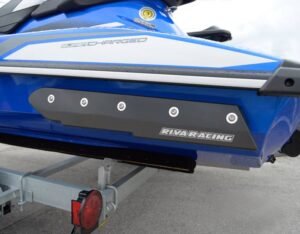
Depending on the model, they may be mounted along the rear sides of the hull.
Inspect:
Sponson body
Mounting hardware
Attachment points
Surrounding hull
Sealant where applicable
Look for:
Cracks
Impact damage
Looseness
Missing fasteners
Separation
Damage around mounting points
A damaged or loose sponson can affect handling.
Compare both sides of the machine when something looks questionable.
Symmetry can tell you a lot.
The upper portion of a PWC deserves inspection too.
Check:
Deck surfaces
Footwells
Rub rails
Bow area
Handlebar area
Seat
Seat latch
Access panels
Storage lids
Hinges
Latches
Look for:
Cracking
Loose panels
Missing fasteners
Damaged seals
Broken latches
Water accumulation
Deteriorated weatherstripping
Footwells collect:
Water
Sand
Dirt
Fish slime
Bait
General evidence that somebody had a good day
Keep drains clear where provided and clean accumulated debris.
Fishing PWCs may require more frequent cleaning because fishing equipment and catch add considerably more debris than ordinary recreational riding.
How to Clean a Personal Watercraft →
The seat often provides access to important mechanical components.
Check:
Seat condition
Latching mechanism
Hinges where equipped
Rubber seals
Weatherstripping
Access-panel seals
Damaged seals can allow unnecessary water into areas intended to remain protected.
Make sure seats and access panels are properly secured before operation.
A seat that looks closed isn’t necessarily latched.
Some moisture inside a PWC may occur during normal use depending on the machine and operating conditions.
A significant increase in water deserves investigation.
If you’re removing considerably more water than usual after a ride, ask why.
Possible sources can include:
Hull damage
Drain plugs
Damaged seals
Loose fittings
Hose connections
Cooling-system components
Driveshaft or propulsion-system areas
Previous repairs
Other mechanical components
One of the most useful things an owner can learn is how much water is normal for their machine after typical operation.
If that suddenly changes, investigate.
Do not simply drain the water and forget about it.
The water got there somehow.
Inspect drain plugs and sealing surfaces.
Check for:
Damage
Missing seals
Cross-threading
Debris
Loose installation
Follow the manufacturer’s procedures regarding drain-plug installation and removal.
Used PWCs may have previous repairs.
A previous repair isn’t automatically a problem.
A poorly executed or deteriorating repair can be.
Look for:
Different surface texture
Mismatched finish
Uneven contours
Cracking
Separation
Visible filler
Unusual flexing
Water intrusion
If you know a repair exists, document it.
Photographing the area periodically can help identify changes.
When Tin Can Boat Works restores or converts a PWC, existing hull repairs and newly completed repairs should be photographed and documented whenever practical.
Those photographs can become part of the machine’s Digital Owner’s Manual.
A future owner should be able to distinguish between:
“This was repaired during the build.”
and
“Where did that come from?”
Documentation answers the question.
Beaching is convenient.
It can also be hard on the hull.
Sand may seem harmless, but repeatedly sliding the hull across sand, shells or small rocks can wear the bottom surface.
Before beaching:
Know what is beneath the water
Approach slowly
Avoid rocks and hard debris
Be aware of the intake
Avoid operating the jet pump in very shallow water
Whenever possible, reduce unnecessary hull contact with abrasive surfaces.
A PWC can pull sand, stones and debris toward the intake.
Follow manufacturer recommendations for minimum operating depth and shallow-water procedures.
This isn’t only about the hull.
What happens underneath the machine can quickly become a jet-pump problem.
PWC Jet Pump, Intake & Impeller Care →
Trailer loading is another common opportunity for hull damage.
Watch for:
Misaligned bunks
Exposed hardware
Damaged bunk carpet
Incorrect trailer depth
PWC contacting trailer structure
Excessive power loading where inappropriate or prohibited
After loading, look at how the PWC sits on the trailer.
It should appear properly centered and supported.
If the machine suddenly begins loading differently than it normally does, inspect the trailer setup.
Don’t just keep applying more throttle until something agrees.
PWC Trailer Care & Setup →
A clean hull is easier to inspect.
You don’t need to polish the PWC after every ride.
Remove enough:
Dirt
Salt
Sand
Vegetation
Fish residue
Bait
Scum
to see the surfaces underneath.
Cleaning often reveals:
New scratches
Cracks
Loose hardware
Damaged seals
Corrosion
Impact damage
That’s one reason cleaning is part of maintenance rather than simply appearance.
How to Clean a Personal Watercraft →
Consider professional evaluation when you find:
Significant cracking
Deep structural damage
Major impact damage
Suspected delamination
Significant water intrusion
Damage around the intake or jet-pump mounting area
Loose structural components
Damage affecting handling
A deteriorating previous repair
A condition you cannot confidently identify
PWC hull materials and construction methods vary.
The correct repair depends on what the hull is made from and how it was damaged.
If you don’t know, find out before repairing it.
A used personal watercraft doesn’t need a flawless hull.
Scratches happen.
Docks happen.
Trailers happen.
Fishing happens.
What matters is understanding the condition of the machine and recognizing when something changes.
Inspect the bottom.
Look around the intake.
Check the ride plate.
Pay attention to previous repairs.
Watch for unusual water intrusion.
And document questionable areas so you can compare them later.
A PWC doesn’t need to look new.
It needs to remain structurally sound and ready to use.
PWC Jet Pump, Intake & Impeller Care →
PWC Trailer Care & Setup →
How to Clean a Personal Watercraft →
Personal Watercraft Owner’s Guide →
Tin Can Boat Works
Small Boats. Serious Fishing.