Phone:
(701)814-6992
Physical address:
6296 Donnelly Plaza
Ratkeville, Bahamas.
Learn how to check the hull, transom, rivets, corrosion, modifications, trailer, title and more before bringing home a project.
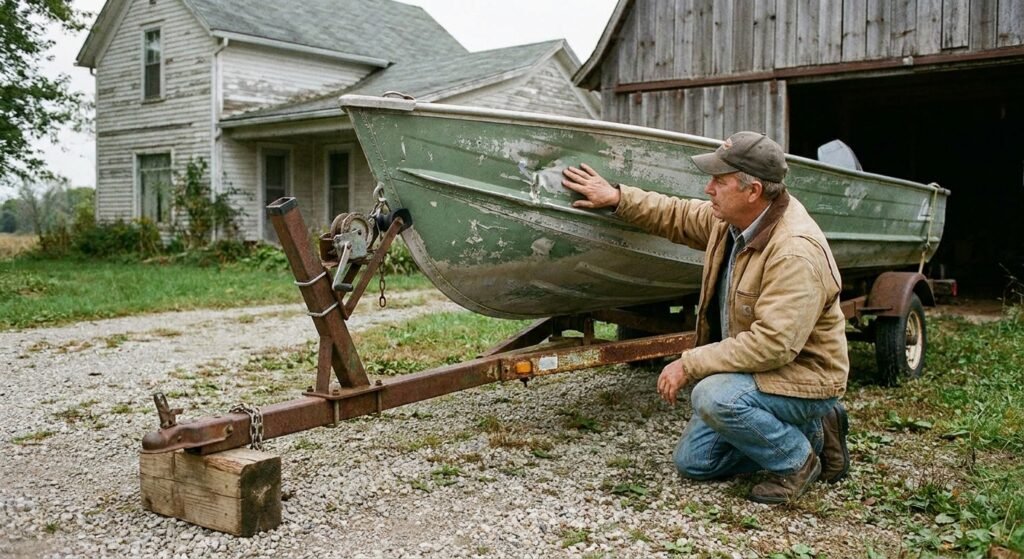
Used aluminum jon boats can be some of the best values in fishing. They’re simple, durable, easy to tow and can make excellent fishing platforms without the cost or complexity of a larger boat.
They’re also easy to buy badly.
A low price can make an old jon boat tempting, especially when all it seems to need is a little paint, some flooring and a trolling motor. But problems with the hull, transom, previous modifications or paperwork can quickly turn an inexpensive boat into an expensive project.
Before buying a used jon boat, slow down and look beyond how it appears in the Marketplace photos.
Here’s what we look at when evaluating an older aluminum boat for a potential Tin Can build.
1. Start With the Hull
The hull is the foundation of the entire project. Seats, flooring, electronics and paint can all be replaced. A seriously compromised hull is a different matter.
Walk around the entire boat and look at it from several angles.
You’re looking for:
A few battle scars may simply tell you the boat has been used. A deep crease across the bottom, cracked weld, badly damaged chine or heavily patched hull deserves much more attention.
Whenever possible, get underneath the hull.
Some of the most important damage may not be easily visible from inside the boat, especially when an existing floor or deck covers the interior.
Pay particular attention to areas where the boat contacts trailer bunks and rollers.
If you’re looking at a riveted aluminum jon boat, examine the rivet lines carefully.
Look for missing rivets, loose rivets, damaged heads and signs that someone has previously attempted to stop leaks.
Sealant smeared over rivets isn’t necessarily proof that the boat is bad, but it should make you investigate further.
Ask the seller directly:
Does the boat leak?
Then follow that with:
Where does it leak and how much water does it take on?
Those are better questions than simply asking whether it’s “water tight.”
A minor leaking rivet may be repairable. Numerous leaking seams or evidence of repeated unsuccessful repairs can change the economics of the entire project.
If the seller is willing and circumstances allow it, a water test is even better.
The transom is one of the most important areas to inspect on an older aluminum boat.
Many jon boats use wood as part of the transom structure. Years of exposure to rain and moisture can eventually cause that wood to deteriorate.
Look for:
Grab the transom and apply some pressure to it.
It shouldn’t feel like it’s moving independently from the rest of the boat.
If an outboard is installed, watch the transom while pressure is applied to the motor. Excessive movement deserves investigation.
A bad transom doesn’t automatically make a boat worthless. Transoms can be rebuilt. But the repair needs to be part of your purchase decision rather than something you discover after getting the boat home.
Aluminum doesn’t rust like steel, but that doesn’t mean it can’t corrode.
Pay particular attention around:
Look for white powdery oxidation, pitting or areas where the aluminum appears to be deteriorating.
Also pay attention to the hardware previous owners used.
Mixing inappropriate metals and fasteners with aluminum in a wet environment can contribute to galvanic corrosion.
A dirty hull can be cleaned.
Aluminum that has been eaten away is another issue entirely.
One of the first things many people do after buying a jon boat is modify it.
Unfortunately, not every previous owner was a boat builder.
Raised casting decks, pedestal seats, storage compartments, wiring, lights and homemade consoles may look impressive in a photograph while hiding problems underneath.
Ask yourself:
How was this attached?
What’s underneath it?
How much weight was added?
Can I inspect the original hull?
A beautifully carpeted casting deck isn’t necessarily an asset if it’s hiding corrosion, rotten wood or questionable structural modifications.
For a restoration project, an ugly but largely untouched boat can sometimes be a better starting point than a heavily modified one.
If the boat still has its original capacity plate, photograph it.
The plate can provide important information such as:
Don’t assume that because a larger motor physically fits on the transom that the boat was designed for it.
The same applies when planning decks, batteries, fuel tanks, coolers, fishing equipment and multiple anglers.
Everything you add to a small boat adds weight.
That’s particularly important with narrow jon boats where weight distribution and stability can become significant concerns.
Stand behind the boat and sight down the hull.
Then do the same from the bow.
You’re looking for obvious twisting, distortion or asymmetry.
Old aluminum boats get dragged, dropped, overloaded, improperly trailered and occasionally hit things they shouldn’t.
Minor imperfections are normal.
A hull that appears significantly twisted or distorted deserves a much closer inspection.
Old plywood and carpet aren’t worth much, but they can tell you quite a bit.
Soft flooring may indicate prolonged water exposure.
Waterlogged foam can add significant weight.
Stains can show where water has been collecting.
Corrosion underneath carpet or wood may be hidden until materials are removed.
If the seller won’t allow you to remove anything—and understandably, many won’t—inspect every area you can access.
Use a flashlight.
Open compartments.
Look beneath seats.
Don’t let a freshly painted deck keep you from examining the boat underneath it.
The trailer can either add substantial value to the deal or become another project.
Inspect:
Check the tire date codes rather than judging tires only by tread.
A tire can have plenty of tread and still be old enough to need replacement.
Also make sure the trailer actually fits the boat properly. Poor bunk or roller placement can damage an aluminum hull.
When evaluating the purchase price, think of the boat and trailer separately.
A $1,000 boat sitting on a trailer that immediately needs $600 worth of work isn’t really a $1,000 package.
If an outboard is included, don’t let the presence of a motor automatically make the deal seem better.
An unknown motor can become the most expensive component of the entire project.
Ask:
Whenever possible, see the engine run from cold.
“Ran great last time I used it” is not the same thing as watching it run today.
If you don’t know enough about outboards to evaluate one properly, factor that uncertainty into what you’re willing to pay.
A cheap boat isn’t a bargain if you can’t legally put it in your name.
Before handing over money, determine exactly what paperwork is required where you live.
Verify the Hull Identification Number (HIN) on the boat and compare it with the seller’s paperwork.
Look for signs that the HIN has been altered, removed or doesn’t match.
Do the same with the trailer when applicable.
Paperwork problems can be much harder to fix than a leaking rivet.
For a project boat, our preference is simple:
Know exactly what you’re buying and make sure ownership can be properly transferred before you buy it.
This is the fun part.
Once you’ve determined that the basic boat is sound enough to consider, stop looking at what it is and start thinking about what it could become.
Consider:
A 12-foot jon boat designed for one angler fishing protected water doesn’t need to become a miniature bass boat.
Likewise, a wider 16-foot hull may offer enough room and capacity for a much more elaborate fishing layout.
The best build isn’t the one with the most stuff.
It’s the one that makes the best use of the boat you started with.
There’s no single answer.
Age alone doesn’t determine value.
A clean older aluminum hull with a solid transom, proper paperwork and good trailer may be worth considerably more to us than a newer boat covered with questionable modifications.
When evaluating a project, think about the total finished cost, not just the purchase price.
Consider:
Purchase price + trailer repairs + hull repairs + transom + flooring + electrical + batteries + trolling motor + outboard + registration/title costs + fishing equipment + everything else you plan to add.
That’s where cheap projects sometimes stop being cheap.
Before buying, make sure you’ve checked:
And there’s one more question worth asking:
Old boats almost always have surprises.
If the entire project only makes financial sense when absolutely nothing unexpected goes wrong, you’re probably paying too much.
Some of our favorite project boats aren’t the ones that look best in the listing.
Faded paint, ugly carpet, old seats and years of fishing grime can all be changed.
What we’re much more interested in is what’s underneath.
A fundamentally sound aluminum hull with good bones can be the beginning of an excellent small fishing boat.
That’s what we look for at Tin Can Boat Works.
We take small aluminum boats and rebuild them around what matters most: getting back on the water and fishing.
Small Boats. Serious Fishing.